Thursday, June 7, 2012

The Wait


Two big WAITS have changed the course of my life. These waits have wet me in tears. The wait is the weight of my life. So please—don't say "wait." That word now gives me mild anxiety and a sudden urge to check my watch.

The first wait was when I liked a girl. She knew I loved her. I even sent her a chit—folded carefully, like a tiny paper airplane of hope. I waited for her reply. And she always told me to wait. I don't know why. Maybe she enjoyed watching me suffer. I waited with hopes and expectations for two years. And what did I get? She got married. Not to me. I WAITED FOR HER TO GET MARRIED. Quite funny, isn't it? Ha ha. Ow. This wait incident changed the course of my life—specifically, it taught me to never trust girls. Or chits. Or paper airplanes.

The second wait was when I missed an interview. My friend and I were walking to the interview. On the way, he stopped to smoke. Then again. And again. He puffed frequently, cutting down our time. Every time, I had to wait for him. We reached seven minutes late. Seven minutes changed seven generations of my beloved profession. The funny part? The friend was happy to reach late. He knew he wouldn't succeed in the interview anyway. Just surreal. This second wait too changed the course of my life—and my opinion of friends who smoke.

I soon made up my mind. Whenever I think of "wait," it kills me a little inside. So now I walk alone. I least bother about the decorum or the institutions of this life called living communities. I still walk alone. It is sad. A pitiful life, honestly. But at least no one asks me to wait while they light a cigarette.

However, the antimony of life—the strange contradiction—is another way round. And now, there are many things to wait for: waiting for my Bangalore exam result, waiting for houses to vacate, waiting for holidays to come. Wait… wait… things may come. But I wonder if they will turn out good or bad. Probably both. Probably at the same time.

Only yesterday, you (name withheld) said the same thing to me: "Wait." I have decided: all my waits will now become one big WAIT. I hope this third and last wait will be the one that finally arrives. I will wait. I will hope for the best. If not… well, I may have to wait my life here permanently. In which case, please send snacks.

Monday, June 4, 2012

On Her Majesty’s Birthday(May You Be Blessed)

The Queen of Bhutan
We are lucky to be born in a country called "Shangri-La," and even luckier to be led by a king with a handsome and beautiful mind—His Majesty King Jigme Khesar Namgyel Wangchuck. The King's marriage to Jetsun Pema is an adornment to the country. It is indeed a momentous union of true harmony, destined by time. The King and Queen married on 13 October 2011 at Punakha Dzong.

Queen Jetsun Pema was born in Thimphu on 4 June 1990. The Bhutanese people adore her simple and calm manner. She listens to the sufferings and problems of ordinary people and supports them. She is an ideal queen—a mother of Bhutan, an advisor, and a guide. With her great love and affection, she guides Bhutan toward modernity without sacrificing our great traditions. She thinks and acts on life as it is lived in a simple society. The Queen travels with His Majesty to many parts of Bhutan, mingling with her subjects, and this shows her grace and caring attitude toward our citizens. This love and care for every individual Bhutanese makes us feel safe, happy, and comfortable.

It was a great day when you were born. As we celebrate your birthday, we also celebrate the anniversary of your arrival in this world—and how you made it a better, happier place for us. The fourth of July is a great day to keep alive. Let the golden rays of the sun and moon reach you with wishes of success, happiness, and prosperity. Happy Birthday.

And thank you for having a birthday, and for giving us a reason to thank you. Thank you for being a wonderful person and an inspiration all along, all the time.

Their Majesties met the earthquake victims in Eastern Bhutan and Haa, the fire victims in Bumthang, and the windstorm victims in Trashigang and Pemagatshel—the problems of yesteryears. The people were given what they needed in life and brought back to normalcy. Thank you for these.

Long may our land be bright. Long may we celebrate in prosperity and jubilation, leading toward a common destination: Gross National Happiness. We stand strong and stable without any hesitation because we live under a King and Queen who are very friendly and helpful—the jewels of our country. Thank you for these.

The sincere, constructive, and assiduous King and Queen, with their good personalities, will play a role alongside an equally energetic elected Prime Minister. We hope to see Bhutan rise heroically and unimaginably as one of the best countries in the world.

These are the hopes of the people and the royal couple.

Thanking you.

May you be blessed.

Friday, June 1, 2012

The Mistaken Identity


Look around you. There is nothing without some Chinese stuff. The Chinese are everywhere—they have reached every nook and cranny of the world. Chinese food, Chinese cuisine (yes, that's two ways of saying the same thing, but it's worth repeating), Chinese gadgets, Chinese blankets, commodities, goods—everything. It has reached places where Chinese people themselves have not set foot. China has dominated the market and the pockets of the world.

Here in Bangalore, and particularly where I am living, Chinese people are rare—despite their country having the world's largest population. There may be political reasons. China and India. Not exactly best friends. The point is, the people are not seen like their goods are seen. They are so rare that many people have asked me—many times—"Are you from China?" I wanted to answer by saying, "Only a Chinese can be everywhere." But instead, I blurted out quietly, unheard by them, "Do you think I am a dominator?"—because, as we all know, the Chinese have dominated the world. I have a Chinese-like face, but my ways and manners are somewhat different. Since I wear jeans and shirts, perhaps they think I am a little un-Bhutanese. Or perhaps they think Bhutan is a district of China. Geography is not everyone's strong suit.

Only yesterday, a group of my new friends asked me the same question. I laughed at them for not knowing about our countries, and the laughter even reached my Adam's apple—but it melted there with this: "Are you from Mars?" Sometimes, people behave as if they are completely alien. And I say that with love. Mostly.

The way they write our country's name makes me feel weird: "Butan"—very short indeed. Our Dolly-Jolly madam, Chitra Das Gupta, also calls me someone from "Butanic," a very unusual name, madam! Butanic sounds like a new brand of organic tea. Anyway, I always have a good time explaining my country, Bhutan—its history, cultures, traditions, attitudes, manners, thinking, and so on—and how it differs especially from China and others. Blah, blah. But happy blah.

For many strangers who have little or no knowledge of my country, I have become a real representative of my nation. Ah-ha! Representative of the country! No salary, but plenty of responsibility. I describe Bhutan as next to heaven and everything perfect. Sometimes, I sound too chauvinistic and patriotic—especially when they see some Bhutanese hanging around with wine in Bangalore. "This is your country?" they say. I have no choice but to counter the Indians: "They have been influenced by where they are living." Not a good excuse, I guess. This answer really makes them crazy. You can almost see the smoke coming out of their ears.

I usually conclude by saying that we are in the same boat—to balance the weight of nationalism, of course. Same boat, different oars, but at least nobody is rowing alone.

Thursday, May 24, 2012

The Crush


Think not and say:

Who were we before?
Assuming life with many pretensions—
this loneliness and longing kill slowly.

Going along with this assumed decorum,
this will and self-willedness—
fed up with these restraints of life.
Let's do away.
Live, and like.


The other day, friends told
the same, same story:
"To be what you are not—
as faltering, is this life?"
They don't falter at small restraints,
walk triumphant walks.
Live and have,
and have and live.


I told them: I've a crush on someone,
and as a natural tendency,
shower unnatural feelings.
They told me: think not, act more.
Was the help not in their hands?

Yes. I think more and act less.
That's how I have a mundane life.
All is false in love—
for there is nothing wrong with loving.
This freak makes me weak.
I'm afraid I'll crash my own life,
the quick and deep.


Oh, come on, dear—
life is the same series.
Act away from trivial-trifling matter,
keep us going
with sparks.


Everyone will have a crush on someone, and it’s certain to human feelings; to love and appreciate someone. The poem asks the lover to get away with the decorum or institutions of what is called identity, live unbounded from the societies, and do whatever a mind says. Sounds like Andrew Marvell’s poem, "To His Coy Mistress," to "seize the day" - to make the most of today and not put off action until tomorrow.

Sunday, May 20, 2012

A Transitory Life

"Sometimes you are nobody in life, you have no money,

You are not successful, you are not pretty,

but you mean well and have a good heart.

People should pay more attention to people like that."  says Celine Dion.


Last time, on one of my trips, I had a feeling of the weird unnaturalness of this transitory world. There is nothing as "yesterdays" or "tomorrows"—as such, it's fleeting. We live to see shifting things around us. It's difficult to pass through so many kinds of lives, and to think about dying, parting, and leaving all these loving people and the world—only to become nothing.

Some images of life that ring hard within us (all photographs are from my photo albums except two from Google).

Sleep, for maniacs infatuate this world 
Poor man, rich heart. "Wealth and riches are illusory; show not over-fondness for them." A Buddhist saying. (Photo courtesy: Google)


Running into the midnight. "It is better to travel well than to arrive."Buddha.(photo courtesy: Google)


The nature of flower and our life is same: to stand in the rains or shines and then decay. Life is transitory, like the morning dewdrops on the grass; Be not idle, nor give time to worthless works, O Guru


"All worldly pursuits have but one unavoidable and inevitable end, which is sorrow; acquisitions end in dispersion; buildings in destruction; meetings in separation; births in death. Knowing this, one should, from the very first, renounce acquisitions and storing-up, and building, and meeting; and, faithful to the commands of an eminent Guru, set about realizing the Truth. That alone is the best of religious observances."-Milarepa


Ever transient is this world of ours; all things change and pass away; For a distant journey even now prepare. So, know emptiness, and be compassionate.


Friday, May 18, 2012

Chick

Reader's Restriction:
The humor below is intended only for a mature audience, as it contains some suggestive language. The writing does not necessarily blame any language or culture.


Born and brought up in eastern Bhutan, the only language I knew was Sharchokpa. But I always wanted to learn other people's tongues. And since Lhotsampa was quite the popular on the linguistic block, I was excited to pick it up.

In Class IV, luck finally smiled at me. Enter Bishnu Kafley—my Lhotsampa friend. We remained thick as thieves for many years, right up until we graduated Class VIII. After that, life happened, and we lost each other. But hope floats. One fine day, we shall meet again, and I will surprise him by speaking his own mother tongue. That's the dream.

Back in those days, I didn't know his language, and he didn't know mine. So what did we do? We spoke headless-legless English. You know the kind: "Come," "Go," "Eat," "Play"—all accompanied by dramatic body language that would put a mime artist to shame.


As the chick grew into a cock, I graduated from the Samtse College of Education. By then, I could speak Lhotsampakha here and there—enough to order food and perhaps insult someone.

My first posting was in 2005 at Tsirangtoe Lower Secondary School, Tsirang. It was both fortunate and unfortunate. Fortunate, because I was finally in a place where the majority of the population were Lhotsampas—a live laboratory for language learning. Unfortunate, because I had to live in a remote, windy, damp place that made my bones ache and my socks perpetually wet.

Anyway, I was eager to learn their language. If not master it, at least grab a few words and semantic orders by the throat. 


My students always knocked me out—and they continue to do so, even in my sleep. Their beguiling faces, naughty-dirty expressions, and rough-murky behaviors have a way of waking me up at 3 AM for no good reason.

This particular incident happened in what was probably my third class of the third chapter. I had jumped two chapters ahead to start with the easiest topic: domestic animals. Being a geography teacher, I was, of course, teaching geography. But that day, we talked about animals. I asked my students to name a few. They did, one by one.

Then I decided to go a little further—animals and their young ones. (A teacher always adds something extra to the topic. It adds to the teacher's persona and showcases his high erudition.)

"Cow-calf, pig-piglet, horse-foal, chicken-chick," I announced with academic pride.

The students burst into sudden, suspicious laughter.

"Chick," I repeated, sensing something was fishy.

The laughter continued, now with added snorts and elbow nudges.

"Chick!" I said again, playfully but louder.

By then, the giggles had spread like wildfire, and the girls began to bend their heads toward their desks as if searching for lost contact lenses.

"What's so funny about 'chick'? Do you know what 'chick' means?" I asked, genuinely puzzled.

"We know, sir," a faint voice shot up from the back.

"Sir, it's a dirty word," another student declared.

"What is it? I want to learn too," I said, innocence dripping from every syllable.

"Not in the class, sir," the class captain said firmly, as if guarding the gates of a national secret.


I pulled the captain aside after class.

"Sir," he said, shuffling his feet and looking at the ceiling, then the floor, then the ceiling again, "it means… sleeping together… and having sex together, sir."

My jaw dropped. My eyebrows climbed into my hairline.

I had never imagined I would go that far. The word chick — innocent, feathery, barnyard chick — literally meant something else entirely in Lhotsampakha. Something that rhymes with duck. Something that should not be said in a classroom. Something that made me want to crawl under my desk and hibernate for a week.

I didn't go to that class for three days.

When I finally returned, I made a solemn promise to my students: "The word 'chick' is strictly banned from this classroom. Say 'baby chicken' or nothing at all."

From that day onward, my impatience to learn the Lhotsampa language waned considerably. Some lessons, after all, are learned the hard way — with red cheeks and a sudden urge to become a hermit.


Moral:
When learning a new language, always ask for the other meaning before opening your mouth. And never, ever teach domestic animals on a Monday.

Sunday, May 13, 2012

The Trip

Yesterday, our class—along with three professors—visited three legendary temples in Belur, Halebeedu, and Shravanabelagola. The total journey was about 222 kilometers from Bangalore. It was a long ride, but worth every bump in the road.

These places house some of the most impressive historical temples I have ever seen. Every piece of art and architecture is carved from stone—massive boulders and the tiniest pebble-sized fragments alike—each revealing rich, intricate details. Thousands of different Indian inscriptions and motifs cover the surfaces like a stone encyclopedia no one can fully decode.

The monuments are nothing short of wonderful. They depict religious history, mosaic patterns, scenes of music and dance, and stories I could not stop staring at. The stone craftsmanship is so perfectly finished that it almost feels unreal.

I honestly doubt that any mere human mortal could have done this sculpturing. There is no question in my mind: gods and goddesses must have lent their hands. Another legend says that superpower kings erected these structures using resources and skills we have long forgotten. (I bought a travel guidebook to learn more—because my curiosity was bigger than my wallet.)

These temples were built around the 11th and 12th centuries, during the Indian Vedic periods. That is nearly a thousand years ago. And yet, here they stand—defying weather, war, and wear.

Every day, thousands of people visit these temples, both from within India and from every corner of the world. And after yesterday, I completely understand why.

I have taken several packs of photos of these museums and temples. Below are a few of them. After all, a picture speaks more than a thousand words—and my words are already tired from all that walking.


The view from the Shravanabelagola' s temple
Looks like Roman architecture-outside of the Shravanabelagola's temple


There are similar structures around

People moving up to see the inner sanctum
Stone monolithic stands rain or shine

Rock crafted statuettes


Inside the structures...
Statues stand high watching
Belur star-shaped temple
Monkeys like sculptors casted out of huge stones

Where are we to go now?
Rows of magnificent works 

Intricate stone edifices
Roman Colosseum building like
Belur busy temple

Towering temple in Belur
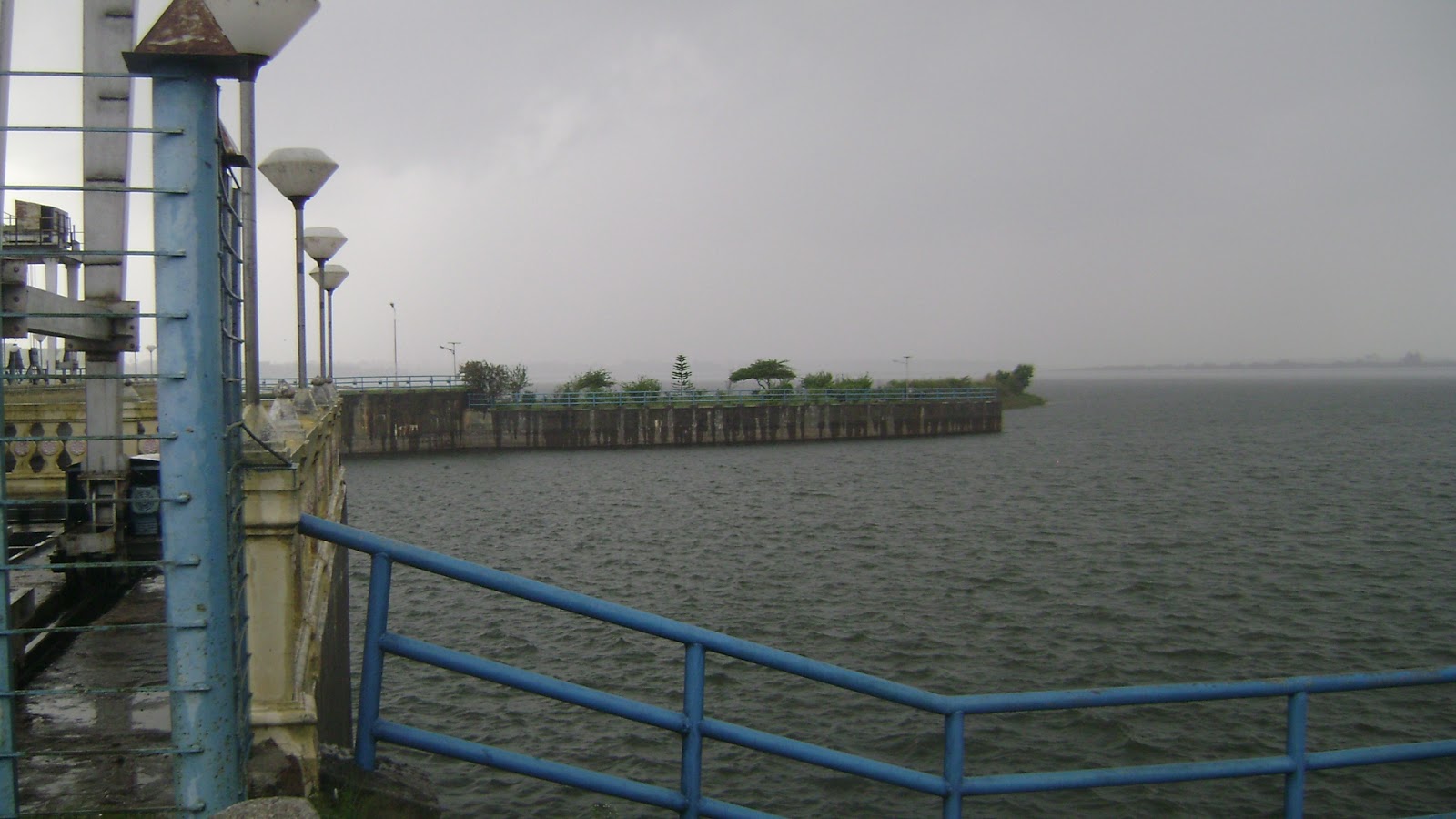
In between, we sneak out to see a dam nearby
This is Halebeedu, a small part of the temple 
There are many Buddha-like statues in all temples

Showing different motifs
Furious Lord
Depicting wars
I am the most handsome of all. Ha...ha...ha!!!
Singing Lords
And dancing Lords
Uh...ah...come on to the last photo
A kaleidoscope of Halebeedu's temple


And the last one isPhew...turn ur computer to see the magnificent colossal statue of Gommateshwar, which stands 58ft 8 inches and considered to be the world's largest monolithic stone statue. There are many stories attributed to this monolithic. You may Google it the easiest i think.


The Temple of Belur, Halebeedu, and Shravanabelagola are difficult to pronounce but very promising places to go. There are so many things to learn from those devoted pilgrimages and tourists, but not for a couple dating, supposedly…haha.