Saturday, April 21, 2012

My Rickety-tricky Journey

The Never-Ending Journey Home: A Traveler's Nightmare

Excitement comes in good times. Hope and excitement are two brothers—inseparable, optimistic, and utterly blind to reality. When there is hope, there is excitement. And when there is excitement, there is usually a disaster waiting around the corner.

Last month, I finally got a break from my tough studies. And God, I had never stayed that long separated from my beloved ones and my beloved place. I had longed to go home—ached for it, dreamed about it, probably muttered about it in my sleep.

Guess what time I woke up on the day of my journey?

The truth? I never slept the whole night. Not a wink. Not a single, sweet blink.


Part One: The Airport Awakening

A friend of mine needed to reach Bangalore airport at 6 AM for his flight. My flight was at 9 AM. Since sharing the cost of a taxi made perfect financial sense, I tagged along like a loyal puppy.

So there I was at the airport. At 4 AM. In the cold winter night.

My excitement fought bravely against the freezing temperature, but the airport chairs fought back harder. We waited for ten—yes, ten—hours. Ten hours of watching sleepy travelers, overpriced coffee, and fluorescent lights that made everyone look like zombies.

Then I received a message on my mobile: my flight schedule had changed from 9 AM to 7 AM.

What?

If I had come late—if I had slept in like a normal human being—I would have missed my flight entirely. Luck, it seemed, had dressed up as my friend Abdul.

Abdul, by the way, turned out to be my accidental philosopher for the night. He talked endlessly about God and human life. His lively discussions about the meaning of existence were so loud that people around us started staring. Big, judging eyes. The kind that say, "Should we call security?"

"Are we terrorists?" I asked my friend. "Why are we getting these beguiling looks?"

Abdul jumped to his usual optimistic conclusion: "Life is like that. To look and learn."

We covered every possible topic: life, old age, meditation, development, India, Bhutan, and—inevitably—girls. Abdul dropped a bombshell: "Girls are the real authors of all problems. Every problem occurs from them. Think."

He gave me many examples. I nodded. I did not agree completely, but I was too tired to argue.

In between these philosophical marathons, we visited the toilet outside the hall two or three times. We both agreed: that airport toilet was better than many living rooms of some poor people. It had soap. It had tissue. It had a faint smell of disappointment, but still.


Part Two: The Frisk and the Flight

By 6 AM, we finally went to the ticket counter. We followed the process, and the process was all in the procedure. I liked that bureaucratic honesty. What I did not like was the behavior of a particularly frisky policeman who frisked me thoroughly. And I mean thoroughly. I felt personally attacked.

Soon we boarded our Jet flight. We ended up in different seats. I felt bored without Abdul. We waved at each other across the aisle like lost children. The man next to me was an old gentleman who slept through the entire journey—which forced me to sleep too. Peer pressure, even at 30,000 feet.

In a blink of an eye, the plane landed at Kolkata airport. Since I had to change flights to Bagdora, I bade Abdul goodbye. He would soon fly to Guwahati. I watched him disappear into the crowd and felt a small pang of loneliness.

Twenty minutes later, I boarded another Jet Connect flight. I counted every minute because I was that excited to reach home. One minute, two, three… almost one hour and seven minutes later, the plane finally landed.

Too long. Way too long.


Part Three: The Strike, The Rickshaw, and The Boiling Blood

But luck, as it turned out, had abandoned me at the baggage claim.

There was a strike. No vehicles were plying toward Phuntsholing. None. Zero. Zilch.

Some fellow Bhutanese travelers huddled together and decided it would be better to take a train from Siliguri. And that was how three of us ended up in a rickety, risky rickshaw for 250 rupees each. The rickshaw made sounds that should not be made by any vehicle with wheels. I prayed to every god Abdul had mentioned.

We booked train tickets. The departure time? Only two hours later. I banged my head on my bag. Why this day? Why me?

At around 5 PM, the local train finally arrived. And someone had told me—lied to me—that the train would be the fastest mode of service. Who said that? I want names.

That train was running at a snail's speed. No, slower. A lazy snail. A snail with a hangover.

My heart was boiling. My mind was incensed. The train stopped every one or two kilometers. Every time it stopped, I wanted to get out and push.

I banged on the train window. "Move fast!" I shouted. "I have to reach Tala! My beloved wife and son are waiting!"

I banged and banged and cursed. The two Bhutanese friends with me dropped another awful news bomb: we would have to take another rickety, risky rickshaw from Hashimara. Another hour or more.

"Maro, jadha!" I shouted into the voidness of the running train. (Translation: roughly, "Kill me, go away!")


Part Four: The Tucson Miracle

At almost 9 PM, we reached Hashimara. By then, I had accepted my fate as a wandering ghost.

But the two friends had someone in Phuntsholing. They had called ahead. Miraculously, a man was waiting with a Tucson car. The car sped off, and I gaped with a small, broken laugh. Finally. Finally.

Within half an hour, we reached Phuntsholing.

On the way, my wife called. She said our Phuntsholing cousin would be coming with our car. I asked him to wait at Tashi Commercial building.

Then my Indian voucher balance reached minus. It stopped working. Such a glitch at such a critical time! I could have thrown my phone into a rice field.


Part Five: The Missing Cousin and the Gold Building

At Phuntsholing, I waited. And waited. No cousin. No car. No sign of anyone at the rendezvous point.

I waited almost twenty minutes. I decided to take a taxi. But on my last quick turn, I saw his car coming—not from Tashi Commercial, but from the Gold Building.

Let me tell you about the Gold Building. There is no gold. It is a rusted, ramshackle building that looks like it might collapse if you sneeze near it.

"What is this?" I cried. "Miscommunication! Pure miscommunication!"

We went to get my car. I shivered at the thought of driving after such a long time. Alone, I started the journey from Phuntsholing—in a frenzy of happiness and exhaustion.

I drove like a man possessed. I drove like my wife and son were disappearing forever. I drove so fast that I reached Tala in one hour—a journey that usually takes one and a half hours or more.


The End: Happy Ending (Finally)

And the rest? Happy ending.

I hugged my family. I ate homemade food. I slept for fourteen hours.

And I swore never to travel again.

(Until next month.)


Moral: Hope and excitement are brothers. But so are disaster and delay. Travel wisely. Pack snacks. And always, always keep your phone charged.

Below are some photographs of my journey.
Day in and day out Bangalore airport is busy
Sperms of light outside the building in the night


This is how Abdul and I waited talking about life and in-between flashing 

The tunnel of life
We need wings to fly

Aerial view of Kolkata city
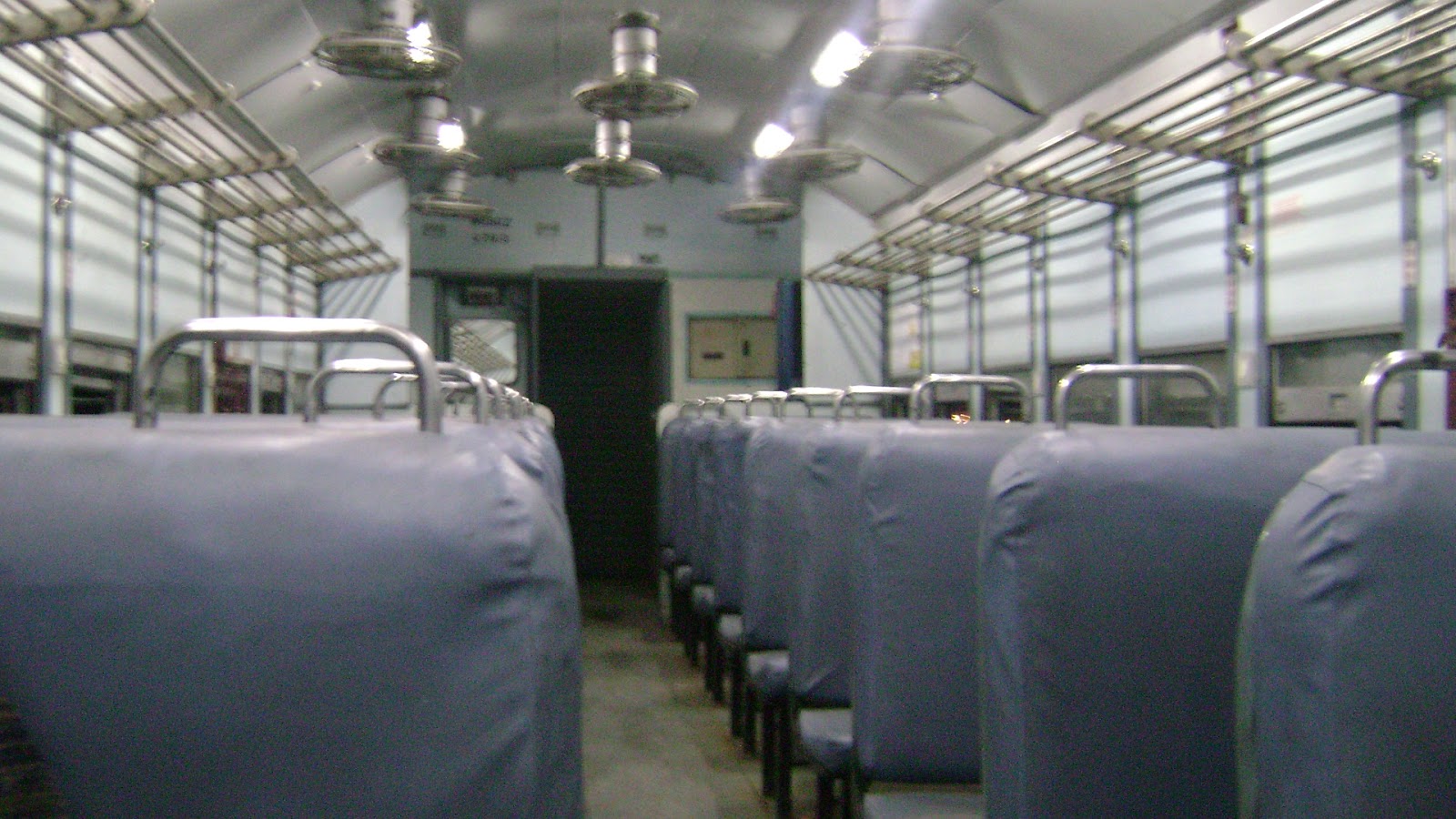
Local train from Siliguri to…? chugging without passenger and running at a snail's speed

Tuesday, April 17, 2012

Back to Where we Begun


A few weeks ago, our second semester started. I told myself, "Back to square one." And honestly, that's life, isn't it? Whatever we dream, whatever we do, and whatsoever life lingers on—it's always back to the square. Back to the square until death. But some mates try to break the rules of nature. I myself wanted to. The result? I joined the semester late. Good that I was late, because some didn't show up for weeks. (At the back of my mind, though, a tiny voice whispers: learning is the first priority. I ignore it professionally.)

One fellow (name withheld, but he knows who he is) has the habit of turning up to class once in a blue moon—maybe when the moon is also feeling generous. He spends all his time wheedling with his life's wife, and hearsay has conjectured that he might be scared of his partner's affairs with trespassers… he he. During the last semester (our first semester), he only showed up to write the exams. God alone knows what he scribbled. Let his result come. I'm pretty sure I will take his place if he succeeds. That's how confident I am in his mysterious methods.

Let me now write about how we survived our first semester exams. Uh… to start this true narration is a disturbing one. It upsets me. I become slightly eccentric. Some might say more eccentric. Good things come, yes—but bad things lurk right behind them.

I've written so many exams. Let me count. I've studied for sixteen years. Every year: two exams, no fewer than seven subjects. So 16 × 14 = 224 exams. Two hundred and twenty-four times of pure, unadulterated dread. I sometimes wonder what benefit I've gained. The only benefits I can confidently name are fear, tension, and a lot of hair loss. My pillow looks like a shedding sheep.

And now, after seven years of giving exams to students, here I am—taking exams again. Hard nut to crack. The stories of exam tension, exam miscreants, and bullies fill the air like a bad perfume during exam season.

I have a friend who wins through his talks. His speeches are like the outbursts of a dam—rowdy, overpowering, delivered through hard-loud sound. He can subdue anyone with sheer volume. Such a tongue is needed in many affairs, especially while buying stuff from certain Indian cheaters. He cuts the price to half using only forceful words. I like to call his language "bazaar language"—rough, crude, and effective. People who know him simply say, "He speaks like that," or "His nature is like that." But this nature "like that" doesn't work everywhere. He has given me full liberty to use his name in any writing. He always asks me to write his full name: Omar Khalid Hashim. "Hashim," he says. It's nice that his name becomes legendary. Anyways, this legend—this roaring lion—was once caught in a net. He too suffered the consequences of rowdy talks.

An unlucky university exam it was. The final paper. Hashim wrote something on his question paper that was not supposed to be there. Two or three words. The stern supervisor found out. Asked why. And Hashim unleashed his bazaar language. The supervisor went mad—not the fun kind of mad—hearing the noise. "Why are you speaking like that?" Intense exchanges followed. The whole exam hall got disturbed. The supervisor took the paper. Hashim got barmier. He rushed after him. More exchanges outside the room. Somehow, Hashim lost his time. The paper was finally returned with a warning: last one. Such is the advantage of a good talker in a disadvantaged situation. Roar, and sometimes they roar back.

Everything is back to square one this second semester. Our lectures. Our superfluous debates. Everything. Everything. Except our HOD for Gender Studies, Dr. Umashankar, left the college. We miss his sweety-moot-y, crafty-witty talks on masculinity, femininity, and trans-gender. Nevertheless, our new HOD plus Gender lecturer, Dr. Prabha, will continue the noble human tradition of stereotyping sex. Good! Some things change. Some things just get a new name tag.

Thursday, April 12, 2012

The Pain of Missing


My loving place,
I would like to go.
My mind inclines there always—
but here I am.
Under the control of life,
control of human.
What I have decided:
to face.
Thinking of my home,
streams of tears fall.


Once the lovely secrets I had—
I regret now I had not told you.
And the faithless acts I had done—
I regret.
Forcing the times, I don't think I would.
Throttling the feelings of pains,
thinking of you,
tears drop relentlessly.


What is this for?
Samsaric is the world for me.
Wherever I go,
it is sadness only.
There is no ending to my sorrows.


Even if we come together
because of the fate we have,
we have to part.
Growing through these sorrows,
life's ending.
I pray to God:
What's wrong with this?
Look after me.
(And if possible, send snacks.)

Tuesday, April 10, 2012

Over Beautiful, Over Dirty


My classmate who had dropped out of school after sixth standard was sitting in my car. Karpola was his name. Yes, Karpola—which means "white"—though his face looked like it had been through a coal mine and then left in the dark for good measure. He had his own dark flashback of a life. He was coming for the first time to Thimphu, the capital city of Bhutan. All his life, he had been married to his village: Labar, Pema Gatshel. Sweating over keeping his dependents alive—farming, carrying heavy loads, and living in a dark home to match his dark face. A mundane, shit-stained life. The main reason for dropping out? Financial problems. Over and above that, he lived with his old stepfather—a professional alcoholic who regularly bet Karpola's mother in drunken card games. (I'm not joking. He actually put her as a bet. Lost her twice on Tuesdays.) Karpola had to take over everything. His mother's sole survival fell on him like a sack of wet rice.

But me? I had studied. I had a job now. We met after seven or so years. My parents' house sat on one lone hill; his sat over the next. We weren't overnight friends—we were infant friends. Same mud, same lice. After talking, he agreed to come for a break from what he called "over cowly life" in the village to Thimphu with me. Visiting Thimphu was his life's dream. And this could be the dream. He was bubbling over with excitement—and also with some unidentified gas from village beans.

We traveled one of the longest journeys. Most of the time, he slept inside the car, being ill from dizziness. On the way, he kept saying, "You overdrive." I overruled him. 50-60 km/hr was average speed, for God's sake. I wasn't racing a wild yak.

Near Thimphu city, we washed our faces fresh. I asked him to be watchful of his dreamland. For a better view, I drove him via Semtokha road. He opened his mouth. His tongue stuck out like a dying lizard as his eyes ran over every corner of the valley. Down the big lane—hundreds of cars, hundreds of crowded buildings. He pushed out, "Oh, over cars! More than cows in my village." I laughed. My bladder almost gave up.

We crossed Lungtenphug and saw the whole face of Thimphu. He looked at the city with his poking eyes, craned his neck through the car window like a turtle trying to escape. He looked arrestingly overwhelmed. "This is over beautiful," he noised into the air. "You misused the preposition," I said, laughing. "We say the most beautiful." "Anyway, this is over beautiful," he muttered. I gave up. Some battles are not worth fighting.

"We can see this place from outside," I fawned over him. "Let's check inside." I liked to lord it over my friend. We entered town, parked at the side of the road. Now the man from the uptown world was roaming the downtown world. We reached the farmer's market. I tried to paper over the cracks, but he had a habit of drooling over every nook and corner. That was where he got petrified. Somewhat allergic to his own dream. His face clouded over like a monsoon sky.

"This is over dirty," he announced. "Beautiful buildings, clean people, clean cars—but over dirty drains, over smelly, over wrappers, over papers, whatnot all over the places." He did me over as if I had personally hand-delivered this mess. I once again corrected him—this time with a sense of responsibility and shame for the place I had been fussing over. "You can just say dirty," I said. He looked at me like I had grown a second head.

My far cousin lived in Changjiji. We slept over for some days while I handled my spinning administrative works at the Education Ministry. Karpola, seeing all kinds of people, felt happy to mix in the mixture. I wanted him to experience city life. One night, we went over with a bang to a discotheque. Big mistake. We saw gangs of youth drunk, hauling over the coals, and soon breaking into a fight. A bottle flew past my ear. Someone's underwear was somehow on the ceiling. "This is over dangerous!" he cried. I lost my words. My intention was to show him another side of life—comfort, beauty, internal peaceful coexistence—but it turned all over. Karpola's habitual use of "over" put me in deep thinking.

The other night, I lay down on my bed and mulled over the word over. I doubled over with a hearty laugh thinking about it. But this wasn't a laughing matter. Was it? I came up with so many reasons. One could look externally beautiful but have dirty interiors—like a fancy hotel with a rat in the soup. The difference between "over" and "normal" was like having two faces of a person. Everything overly over is bad. Overeating? Bad. Overdrinking? Bad. Overusing "over"? Karpola was a walking lesson. But then again, over and over trying makes success. So maybe he was a genius.

After a week's stay, he decided to go home. He had a sort of hangover for his village. "My village is over normal," he said. He seemed head over heels in love with his countryside. I drew a veil over the subject. Karpola's eyes glazed over as if he was over and done with Thimphu's vigor. He got over with his dream—a rather betraying dream—and went back to his village. I didn't think he would be happy to spill over the news of his visit to his village mates. But knowing him, he probably told them Thimphu was "over dirty" and that I lived in a toilet.

I dropped him at the bus station. I had to return the next morning to Gedu. As his bus pulled away, he stuck his head out the window and yelled one last time: "You overdrive!" Then he was gone. I sat in my car for five minutes, laughing like an idiot. Then I drove back—at 50 km/hr.

Sunday, April 8, 2012

Everything


An enraptured piece of mind,
surrounded by happiness today.
My mind—
so much transported and euphoric,
entirely contented.


In this heaven-like earth,
my angel here,
in front of me today—
I wish every day to be.


My birth here was happy,
and luckier to meet you.
No wealth is desirable than you.
The wealth of having you
is the wealth I treasure.
No wealth can substitute you.


My faithful lover,
you will take me through life—
ups and downs.
And I thank you,
and never forget,
for fulfilling my dream.


My only wish
is to keep you happy.
The above gods and goddesses
wish us
with mindfulness of happiness
and feelings of consideration.
To my heaven-sent lover:
wish with no ills and troubles,
because I care for you more than any wealth in the world.


Note: This poem is the very rough adaptation of Bardo’s song.


Saturday, April 7, 2012

Lama Rinpochea

Dungse Thinley Norbu Rinpoche (1931–2011) was an influential modern Buddhist teacher in the lineage of Tibetan Buddhism and a great patron of the Vajrayana Foundation. He was the eldest son of Dudjom Rinpoche, the former head of the Nyingma lineages, and also the father of Dzongsar Jamyang Khyentse Rinpoche and Garab Rinpoche (known for his Terma Tshogpa). He wrote many books on Buddhism, including White Sail: Crossing the Waves of Ocean Mind to the Serene Continent of the Triple Gems.

Dungse Rinpoche passed away in America, and his kudung (sacred body) was brought to Bhutan, where it was kept for the wellbeing of the Bhutanese people for one month.

I was present in Paro (Lango) when his kudung was cremated. Thousands of devotees gathered—it was said that more than 20,000 to 30,000 people attended. Some arrived as early as 2 AM to secure a spot as close as possible. Those who came late had to perch on caves and rugged terrain. Buddhists believe that Rinpoche was an incarnation of Guru Rinpoche himself.

Below are the photos taken on Mechay day.

In the darkness, shines through Rinpoche's Kudung

Sanctuary in the sanctum


Have a close look, who is he? Politics in religion
Ah…oh wondering minstrel
Taking kudung in a Bhutanese procession
Swapping body into smoke, an evanescent of life. Many people cried at this time. It was an emotionally poignant moment.
People rising up to inhale the smoke and to show veneration
This is how rich people misuse the space-the good space while people have to parch on the rocks and in the trees.
Smoky to be on fire
Many Neljorpas tents camped around the place
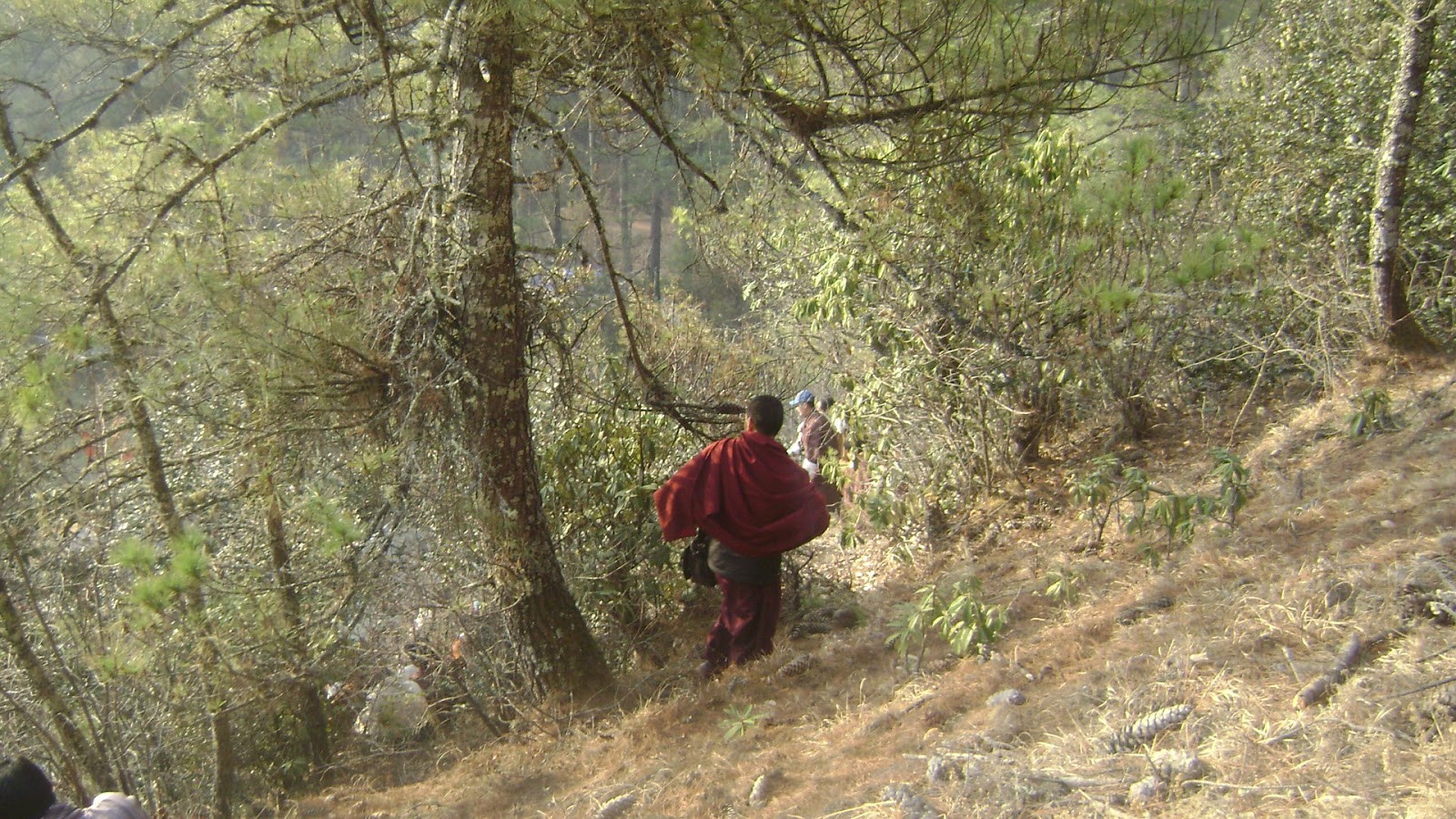
On the way back home the famous Paro Dzong stands rain or shines for hundreds of years. My son’s son would be fortunate enough to see the same Dzong. I said this to my son and he unhappily said to me that I will turn into smoke and disappear. My heart broke apart for sometimes to tear away especially from my beloved people and the earth. But who am I? The great Rinpoche has the same fate.
Forget the dying for now. Live now or never, I told my family. So, we mingle in the tingling town in Paro town for some time. It really is a tingling town, the prices of the things made our head tingle. Those non-eating chilies Chilips tourists have inflated by buying of no use things.
The next day, we went to Phuntsholing to have gracing and blessing from Lam Chime. Lam Chime resides in Sikkim and is the main leader of Theorma Tshogpa in Bhutan. Lam is living for his devotees at this die-able age with his wife. Not all photos were clear and I think it was the cognizant nature of Lama to blur his image for an errant person like me!
And the wheel of the life rolls on and on...and kick the bucket unknown known, unlike Lama rinpoche.

Thursday, April 5, 2012

The Value of Crown’s head

I am not an economist, nor do I understand my own country's monetary system. I can count cash, but a financial crisis or crunch is new to me. My economics teacher taught me that when supply and demand don't match, inflation or deflation occurs. I believe this holds true in every aspect of life. When boys outnumber girls, girls are in high demand. Similarly, when production doesn't align with market value, inflation follows.

So now, what the hell is happening with the Indian rupee (IC) and the Bhutanese ngultrum (BC)? In border towns like Jaigaon and Samdrupjongkhar, the rupee has become scarcer than a kidney for a patient waiting for a donor. On the other hand, the ngultrum is just stacks of paper piling up in merchants' hands.

To witness this crisis firsthand, I walked downtown to see its cause and effect. I stopped at a shirt shop to buy one. I intentionally wanted to shock the shopkeeper by pulling out a bundle of ngultrum notes. After we agreed on a price of Nu. 250, I took out BC notes. The salesperson's sudden, crafty look told me everything. He refused outright, saying he wouldn’t accept BC and demanded IC instead. If I had to pay in BC, he said, I'd have to pay 300—50 extra. Then he leaned in and whispered that if I brought 1 lakh in IC, he'd exchange it and give me an extra 10,000 BC.

I started wondering if the barter system was creeping back. If so, paper cash was becoming useless—it held no real value. I vaguely agreed that I would "try," though I knew that trying would lead nowhere. Recently, a policeman was caught red-handed exchanging IC for BC at a higher rate. That officer was nabbed by the shamus. It makes me think: when it comes to money, the law upholder is often the first to become the lawbreaker. I laughed at the irony.

I've heard that Bhutanese people are doing big business out of this crisis. I remember my father saying, "When one bull falls, another rises." My brother, who is a banker, told me that we Bhutanese are real bulls when it comes to doing business that could seriously harm our own country. I didn't understand him—I'm thick-headed about these matters.

Anyway, the trade or exchange value in border towns is currently 100 IC for 120 BC, and it may rise further. The value of the crown's head is losing to the lion's head. Meanwhile, the government pays 5 percent on GoI facilities and 10 percent on SBI overdraft facilities.

I later dropped in on an old shopkeeper friend who sells undergarments. I hadn't visited him in three years—back then, I bought seven different garments in one go, enough to last over two years. That purchase made him so happy it turned into a sort of "underwear friendship." Now, I realize: was I really being economical, spending so much on small items all at once? It was like buying two cars when you only need one.

He greeted me warmly, then immediately fired questions at me about the rupee crisis. "Who am I to control anything?" I asked myself. I told him the government was discussing it and that it would be resolved soon. After some blabbering, he warned me in a friendly way that Bhutanese people are great spendthrifts—we spend without saving. I asked how much money he gets daily from Bhutanese customers. His answer astonished me: ten thousand or more every day. His is a small shop. If even he gets that much, what must others be getting?

Bhutan exports little to nothing but imports a great deal—90 percent from India. Money flows out, and border areas are flooded with ngultrums. He told me the same story: he needs IC to keep his business rolling. Like other merchants, he said in the name of friendship he'd give me a better exchange rate than others would. I replied, "I'll try"—a safe answer that wouldn't hurt his feelings.

Wednesday, April 4, 2012

My Dear Jane is a Game

Today—3rd March 2012, the day I write this—I will finally reveal my undisclosed secret: why I was never like my other friends who chased after girls. And you might wonder why today, not earlier and not later. The truth is, I am afraid I will soon leave these days, just like my dear Seltu—Mr. Dog.

Today, my dear Seltu kicked the bucket. He had been suffering from a strange illness for twenty days. He moaned and whined with tears in his eyes. I took him to a veterinarian, but to no avail. His condition never improved. I buried him near my maize field, said goodbye to my faithful friend, and returned home wiping away my tears.

But my pain did not end there.

Like my Mr. Dog, I have been moaning and whining for twenty years—not less, not more. Twenty years, not twenty days. I know the exact dates: 7th July 1987 to 7th July 2007. Wow, how the dates match. And this is the story of those years.

This is no tale-telling tale. It is a true, tearing story of pain, of weepy me, and of my strange, happenstance feelings. The story begins at the beginning and leads to the ending—as it should.


Pre-primary school was such fun. Unashamed girls dashed past each other. Kids without underwear rolled around for no reason. Children punched each other for no reason at all. But one lovely picture became encrusted in my mind.

Pictures, art, and photos were loved by children. That was how we were made to get attracted to books. I picked up my first picture book—a book that would stay with me for twenty years. I was attracted by the art on its cover. From that moment, she soon became a part of me.

Simply put, she was beautiful. She wore a little white cloche hat on her head. Her face was pure and white. Her dreamy eyes smiled. Her nose was perfectly molded. Her lips were sparklingly crimson. Every beautiful adjective in the world could describe her beautiful face.

I tried to recognize the big, bold letters: J…A…N…E A…U…S…T…E…N. Below that were smaller letters: E…M…M…A. What was that? I didn't know. But I knew her face.

I jealously hid that "J" book in the corner of the bookshelf so that my friends would not find it and touch that picture next time. Whenever I visited the library, I took that book and immersed myself in her. She stared at me. I stared at her. I laughed at her, and she laughed back at me.

My friends called me crazy. They called me a fool for laughing at myself. But I was not a fool. I was laughing with my girl.

I had truly fallen in love with her.

Many times, the librarian caught me standing near the door, hoping to enter. "Do you want to rob the library, Khotsa?"

"No, Lopen. I just want to see some books."

But the same response always came: "Your period is over. Go!"

I felt truly maddened when I had to run away from my beloved one, who was locked up inside that room. The closer I went to the room, the safer my feelings became. She was always there, preoccupied in my mind.


I saw a chance to possess the same kind of book. I told my father that I would never go to school unless I had a book from the store. I said the teachers would punish me for not bringing it. I fabricated this story just to get the book.

We traveled for three days from our village to a bookstore in Samdrupjongkhar. My father grumbled repeatedly after buying the book: "What's wrong? There is nothing in this book. Just a girl?"

Surprised or not, I was very happy. I kept the book just above my head, watching over me. I felt safe. I felt happy.


I completed Standard VI, and nobody could believe my result. I was awarded first division. My friends thronged around me. "How did you stay the whole year with one book and still get first division? That Rogtola—the nickname given to the class position holder—is second?"

I was surprised too. But I believed in believing someone. And that someone, for me, was Jane—the girl I had fallen in love with. The more I believed in her, the more real she appeared to me. And the more I succeeded.

I carried my Jane everywhere. By then, the cover had become abraded and smudged, but her face still shone through. I came to know that the book was the story of Emma, who suffered the threats of misconstrued romance. The content of the book had nothing to do with me. The cover was the treasure.

I never showed the book to anyone. If someone had seen me in that high standard class with such a low standard book, they would have gone crazy.

And that was exactly what happened one unfortunate day at home, after my Class X common exam.


My father ransacked my things and laughed at me. "This is what you learn in Class X? We bought this book when you started primary school, and you're still on this?"

My mother's interference made things worse. They talked to each other, and I caught some words.

"He seems to be masturbating while looking at this art girl," my father said intentionally, hoping I would change my behavior.

I felt hurt. I was saddened when they told me to leave the book and study my materials. My girl did not deserve this—to be called nonsense, to be linked to masturbation. I stood up, ran outside, and sat under a tree while my mother noised, "What happened?"

The wind blew heavy. Little by little, I realized that I had been obsessed by her hollow love. The leaves of the tree shaded me, almost covering me completely. I sat there for almost a day.

My mother came with the book. "Take this. This is all yours." She consoled me as if she had understood my feelings.

"No, I put this book in my bag by mistake," I lied.

My mother forgave me, even though I had done nothing wrong. But my father ridiculed me often after that, calling me "dead log," "ludicrous boy," "be careful," and scores of other names.


The next academic year started, and I had to leave my other half at home. Before I left, my father thoroughly frisked my bags. Finding the book on his own bed, he let me go.

It was like axing a tree. I bled inside. The whole year, I spent missing her and pissing away my days. I didn't want any other lover—I already had one. I did not want to betray my childhood love.

I kept her in my mind. Now, there was only one thing in my life: to know who she really was.

Life was whirling in a flood then—troubled studies and unspeakable emotional sicknesses. I tried to find that book, but it was out of edition. She came to my mind and in my dreams as an angel. My dear Jane had led me into the game of love. I spent those mystified years with her, emotionally and mentally.


The same story followed me into my three-year B.Ed course in Samtse. However, I thought a little less of her there because I had to be busy with my tough materials. But my dear Jane often appeared in my dreams.

One day, without noticing, I told my friend that I loved Jane very much. That friend got quite surprised and irritated. "Don't remind me of that," he said. "I loved that art girl too."

I laughed at him but stopped abruptly, knowing the consequence. Such was the fate of loving a picture. My mind felt as if it had been hit with a big tong, plucking out my dream. Dream or real, I thought about her day and night.


The avenues of life changed more than our government changes its policies. Sometimes it healed. Technologies adjust life, and technologies also revive and destroy.

With the pride of modernization and the excitement of new things, I opened the internet. It was the blindest search I had ever made—just to see my art girl. Everyone would question me now. It crazed me too.

And believe me, it was exactly her. I could not mistake her, for I had loved her for so many years. And believe me, she still wore that same little white cloche cap on her head. The same pure, white face. The same dreamy eyes. The same sparkling lips.

Her picture on the screen lingered with me. I read her details—and sorry, I don't want to share those details. My wife would kill me! Her name was not Jane this time. She was something else, but I like to call her Jane.

My father would learn all the ways to operate the internet if I showed him the art girl again. As for that book and the art girl, my father later told me over the telephone that he had had a misunderstanding with my mother, and she had had to burn that book. But now I have the internet to see her every day. My father would wish for that too.


In fact, to see her and to think about her was to throw me like a stone flung far apart—ditched and separated. She was far away. So many mountains and seas separated us. I had fallen. My hands shivered to write something to her. Blinded with love words, expressionless and wordless, I suffered.

And Jane, if somehow you read this true story about you, I would like to say this: I have been waiting for you for twenty years, just like my Mr. Dog—moaning and whining.

And sorry to say, my dear Jane, this is how life is to be lived. I am married now. And what can I do? You will remain in my heart forever and ever and ever—until I kick the bucket, until my soul ceases to function. This I promise you.

But my wife is my life now.