|
| Gedu Moelam Choemo |
“To be blessed” means to be favored by God. Blessings, therefore, are directly associated with God and originate from the divine. In many spiritual traditions, a blessing is not merely a kind wish but a powerful transmission of grace that can purify the soul, heal the body, and restore spiritual balance.
A blessing is essential for removing negative influences from our souls and bodies. We live immersed in a culture saturated with negative attitudes, offensive language, violence, and insolence. The very air we breathe—shaped by the environment we inhabit and the judgments others cast upon us—can make us feel cursed or perpetually anxious that something will go wrong. False judgments against us function like actual curses; they can erode our health, weaken our immune systems, and even manifest as chronic fatigue or illness. The potentially devastating physical effects on people living under persistent false judgments are extraordinary.
Moreover, we are not only burdened by the judgments of others but also tend to harshly judge ourselves. When self-criticism becomes excessive, we must recognize it as a form of self-curse and break it with the authority of God. So when you consider how many people are bound by external and internal judgments, it becomes painfully clear how desperately we all need blessings. This is precisely what any lama would explain during a wang (empowerment) or blessing ceremony.
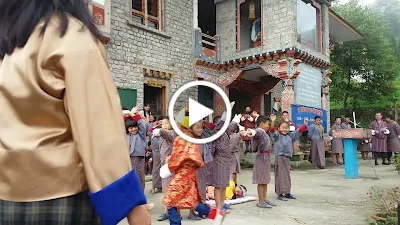
The Moelam Choemo in Gedu is a yearly religious congregation lasting one full week. The fact that it occurs only once a year underscores its profound importance. During this gathering, various schools traditionally sponsor offerings—such as food, tea, or ritual supplies. Last year, for example, Darla School provided a tokha (a ceremonial lunch) to the public and worshippers on October 18, 2016.
But this year, I was taken by surprise. The school was not given a day off to receive blessings. I learned that our own Je Khenpo (the chief abbot of Bhutan) would personally conduct the final Tshewang (long-life blessing) for the people. Distant schools like Arikha and Pashikha canceled classes for the day. Yet it was deeply disappointing that Darla School—located so near to Gedu—held classes as usual. To be honest, there were quiet grumbles, especially among our faithful students and devoted teachers.
That normal schedule did not stop many people from seeking the blessing. The head of the school called an informal meeting and said that any teacher willing to attend the wang could go. That turned into a real headache: almost all the teachers left, leaving only a handful of students behind in the classrooms. But even that did not deter the students. Nearly all of them left as well, saying their parents were waiting for them at the ceremony. As a result, the school descended into chaos—only a few teachers and students remained. It was utter pandemonium.
I truly wonder why our school was not given a holiday when others were. I also question whether we can genuinely promote our religion, traditions, and culture if important spiritual events like this take place and we are effectively barred from attending. I cannot help but wonder if this very disconnect—this failure to honor sacred occasions at the local institutional level—is one reason why the Darla community now has such a large number of Christians. Perhaps people are seeking elsewhere the blessings they feel denied within their own tradition.