Saturday, July 12, 2014

Best or Worst?


The 2014 World Cup is almost coming to an end. Brazil suffered the worst defeat in World Cup football history—7–1, if you’re keeping score at home or in therapy—which has brought great sadness to many of their fans. But a thought came to my mind: "Why only the best?"

I feel the best is selected precisely because the worst exists. Life has two sides, and credit belongs to both. It is because of suffering and worry that we come to know calm, peace, and the divine. Also, without bad games, we wouldn't appreciate the good ones. So thank you, Brazil. You took one for humanity.

Not only the top should be inscribed, shown, and broadcast. We should also write down the worst; they too should be appreciated and acknowledged. I am writing this because of the bad—good things are here as well, and vice versa. Everyone must be appreciated and respected. Even that uncle who oversalts the tea. Even that neighbor who plays the same song on repeat.

How does the world appear to those who are considered the worst or the ugliest? This earth consists of peaks and valleys, the fine and the weak. You encounter people, animals, countries, trees, air, water—everything is somehow divided into the rich and the poor, the superior and the inferior. Consider the many worst and deadly people around the world. Besides our film villains, there are scruffy and scrappy people in our own neighborhoods. You know who I mean. The ones who don't return shopping carts.

And what about animals? Which is the ugliest animal ever seen? I vote for Mr. Snail. It is said that beauty is in the eye of the beholder, to be sure, but this animal would not win a beauty contest even if it were the only one entered. Snails have faces only a mother—Mother Nature—could love, and in the contest of life, that is really the only thing that matters. Let's be honest: a snail is basically a slug with a backpack. And yet, it moves. Slowly. But it moves. That’s more than some people I know.

And I would vote for Brazil for their worst game ever played, but I do appreciate their active participation. They showed up. They tried. They conceded seven goals. That takes a certain kind of courage.

In schools, students are loved only if they excel in their studies. There are teachers in my school who only talk about good students and put more effort into them. They forget the weak ones, or have nothing to do with them. They call them flunkers and hardly check their notes or books. How can those students improve if they are left on their own? You can’t grow a plant by ignoring it and calling it names. Unless it’s a cactus. And even cacti need water sometimes.

The world would seem more harmonious if all people learned from one another—if they recognized what is best and what is worst, working to improve the worst and shape it fairly alongside the best. In this seemingly upside-down world, only the best are loved, even though our worst deserves attention just as much as the best.

One person changed this rule. The Lord Buddha left behind all the best things on this earth. He was a prince of a kingdom, living an esteemed life. Yet he did not want the best—he chose the worst, renouncing all worldly pleasures and wealth. Who would ever have guessed that he would become enlightened? Certainly not his palace chefs.

My own case may shed light on the road between what is best and what is worst. I was brought up with the utmost love by my beloved parents. I wore the best ragged clothes and was treated well. I wanted the best, and I got the best. I was fortunate to have a somewhat plentiful family—I say only in terms of provisions. What I needed, I received. I required the best and expected the best. I lavished much bread, wearing the best clothes, the best shoes, the best oils on school days. Yes, oils. Plural. I was that child.

I was truly convinced that I would always have the best. But what I am experiencing now is purely contradictory. All this life—who will upkeep my best? Like an unripe fruit that must mellow and drop, trifles will overcome my best. Now I face the worst: using less for worse clothes, worse shoes, and so on. I have come to understand that I am succumbing, lapsing, and relapsing into the worst with my meager monthly salary—unless I change my way. Or get a raise. Or find a snail that lays golden eggs.

Thus, I have learned that one should know both sides of a coin. Accept defeat to understand victory. Accept demeaning remarks to appreciate praise. Accept hopelessness to know that there is still hope. And accept that sometimes, you are Brazil. And sometimes, you are the snail. But either way, you keep moving.

Wednesday, June 25, 2014

Busy Days


This mid-year has turned out to be quite eventful. We had Prime Minister Narendra Modi visiting Bhutan. The World Cup is ongoing. And students are writing their mid-term examinations. Teachers, meanwhile, are busy doing paper corrections. In short, everyone has to sacrifice time—and sanity—for mid-terms. Sad, but true.

To lighten the burden a bit, we do group correction. We have Science, Maths, English, Dzongkha, and other departments. The good thing about group evaluation? The work gets done fast. Not only that—we get to eat many delicious dishes like momo, shaphalay, and more, all sponsored by the respective subject teacher. Nothing brings teachers together like free food. This type of evaluation works beautifully if all answers are multiple choice. It saves a great deal of time. And stomach space.

The bad thing about group evaluation? Marking. Especially with essay-type answers or letter writing. When different teachers mark the same paper, marks vary wildly. Some do strict correction and award low marks. Others are lenient and give high marks. And then there are those who give marks just by glancing at handwriting, the first sentence, or the last sentence. I suspect the same magic happens at BCSE evaluations in Phuntsholing.

There's no real way to do comparative analysis of essay-type answers. On top of that, the evaluators' moods fluctuate more than the stock market. These days, the World Cup runs at night, leaving evaluators hanging—literally—throughout the night. Because of drowsiness or a World Cup hangover, the letter 'd' might look like 'b.' So bead could become dead. I'm afraid we're going to hang somebody's future very, very badly. Or it could go the other way: out of sheer laziness or sleepiness, to finish corrections quickly and catch some sleep, someone might give 24 out of 25. There's every chance. One thing is certain: if someone's favorite country loses a match, those marks will hit ground level. Crash landing.

So it's very important to perform special rituals like Wangta and Lungta to bring the best of luck. Yes, it's all unfair. One needs some kind of luck to make evaluators accidentally blind themselves and award good marks by mistake.

I told my students: before any venture—especially difficult tasks like exams—you must do some kind of ritual. If not, your Wangta and Lungta will be thrown away like a piece of shit. (Excuse my French, but that's the technical term.) I also told them: if you don't have anyone to perform such special rituals, why do you call me? I can even perform mask dances for them. And the best part? I don't need any kind of mask!

Some funny answers from our students:

A rough vacation he had!!!


Sentu is dog or cat???


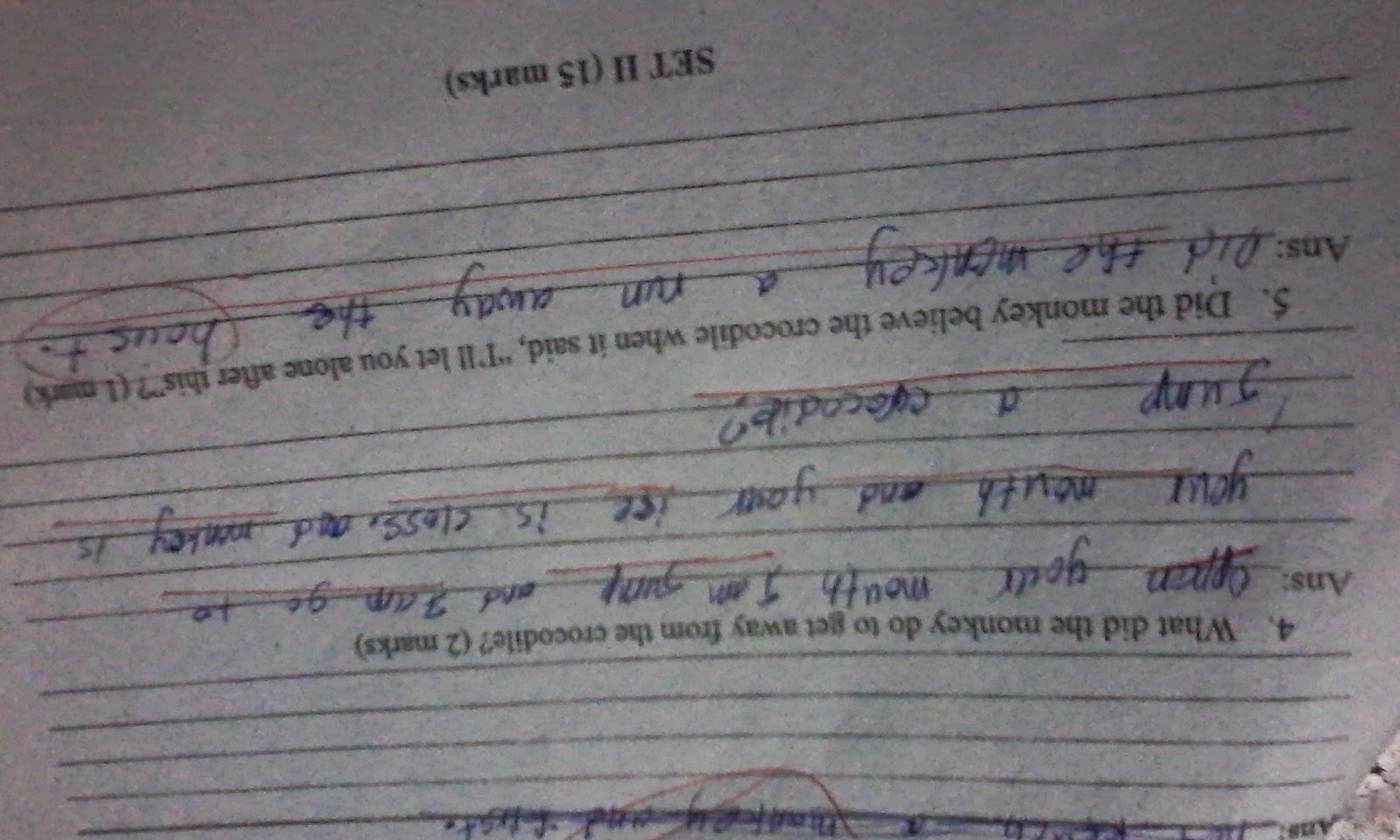
Open your Pandora box, so that i can enter inside permanently.

You gotta make your MUM very mad...

Saturday, June 21, 2014

Another Cup, 2014-World Cup Business


An exhilarating—and escalating—business is in full swing in Brazil, with millions of World Cup fans flooding the place. Turn on your TV, and most channels are showing clips of what's happening outside and inside the stadium. Brazilian culture, arts, and artifacts are proudly displayed, mostly to make a quick buck. At the end of the day, that's everyone's dream, right?

Not surprisingly, the whole world knows about this World Cup. But there's another World Cup going on inside every person's mind: the betting cup. Here in Chukha, the World Cup business is also in full swing. I'd call it "the other World Cup"—people are having a blast making money through games of chance. Gambling is everywhere. Who will actually win? Only God knows. But the gamblers act like they know too—until their luck runs out. They focus on star players, not on teams. And we all know how that ends.

The quality of work has dropped faster than a bad penalty kick. Subordinates, bosses, regular folks, even government servants—all busy betting for their chosen countries. Fluke money is made. Real money is lost. Work gets postponed or ignored altogether. Minds are elsewhere, eyes half-closed to the day's duties.

I suspect many school students will somehow pass this mid-term. Why? Because many teacher-evaluators have decided that one person's academic future is less important than a goal replay. Running on no sleep, they'll skim a sentence or two, slap on a score, and call it a day. Or worse—they'll hand out a big fat zero if their favorite team lost, just to save time for the next match.

Coming to the office late and chatting loudly about nothing will be the new normal. Sinecure workers everywhere! Join any group, and you'll find a debate in full swing—betting in full swing. Late-night quarrels and shouting matches disturb neighbors and households alike. If we were to judge work quality this June and July, half the salary would be generous. Because that's about half the effort being given.

I even heard some people take casual leave to watch a match—for a team that isn't even theirs in any real sense. Let that sink in.


Monday, June 9, 2014

Tell Me Wai-A Slightly Painful Review of Soong Na Oie

From FB


I watched a movie called Soong Na Oie yesterday. Roughly translated, it means Tell Me Wai—though by the end, I was begging, Tell me why. The film is quite run-of-the-mill, which is a polite way of saying it rolls so flat it might as well be a pancake.Directed by experienced filmmaker Mr. Tshering Wangyel, the movie once again falls into one of his trite genres: the love story. Soong Na Oie tries to reflect both sides of life—tradition and modern fashion—but ends up looking confused, like someone wearing a gho with sneakers.  The protagonist, who seems to be an antagonist to his own family, has one glaring problem: he badly needs to shampoo his hair. And I mean badly. Phurba Thinley, playing a sly and panderous monk (yes, that's a word now), correctly observes that the hero's hair resembles that of a porcupine lost in the forest. This, apparently, is meant to reflect our youth's love for Korean culture. But last I checked, Korean stars have fabulous hair, not nesting grounds for small birds. Still, the porcupine look is certainly… a choice.

On the other hand, the female protagonist showcases the real simplicity of village life. She is pure, kind, and probably knows how to grind millet while humming a folk song. So we know from the start that these two wildly different lives will somehow fuse in the end—like butter and instant noodles. Unlikely, but Bhutanese audiences will accept it. One dialogue that viewers will remember—whether they want to or not—is the frequent repetition of Yeid May Na, which roughly translates to There is something. The moment the hero speaks, he starts with Yeid May Na… and then proceeds to say absolutely nothing. There is no something. There is just nothing. It's like ordering a pizza and receiving an empty box with a note that says, "There was supposed to be something here."

The story is entirely predictable—run-of-the-mill and no different from the director's past movies. In fact, his earlier films that I've watched were far better. This one only comes alive because of Phurba Thinley and Azha Namgay's comedies. Without them, this movie isn't for elder citizens—it's a child's play acted out with slightly better cameras. The film also features many loud, earsplitting songs, most of which are lyrical masterpieces like I love you, you love me. Shakespeare must be rolling somewhere.

From FB


On the positive side (yes, there is one), the movie was shot mostly in the picturesque valleys of Bumthang and Paro. The stunning background is the real plus point. You get to see the greenery of Bhutan—at least until a song blasts and you have to look away to save your eardrums. Another good part? The ending. Not because it's good, but because it means the movie is over. As with many films, the side-splitting fights and dialogues keep you engaged for a few minutes. Then the movie ends—right when it should be reaching its climax. And as you already know, the worst become good, good overcomes bad, and somewhere out there, a porcupine is getting a shampoo sponsorship.

Saturday, June 7, 2014

Darla School Literary Club-A Voice of Imagination

An Activity in Progress

Learners should be given freedom in gathering, structuring, and assembling their ideas. They should be allowed to understand, communicate, and write freely. As educators, all we need to provide is proper guidance as their ideas evolve.

The School English Literary Club aims to fulfill that need. With the increasing demand for creative talent in every sphere of life—something that has become especially prominent as modern societies grow more complex—the Literary Club seeks to shape well-rounded individuals, nurturing values such as love, peace, understanding, and aesthetic appreciation. It also helps members develop into charismatic, trustworthy, and well-rounded individuals.

Life is a concoction and creation of many forces. The club helps build a vision for students to live by, creating a home away from home through imagination. They learn to fly on the wings of creative ideas.

Similarly, my school has many clubs. They are strategically planned in writing with full commitment and are executed properly. I believe clubs provide stimulation, relaxation, and interest, especially when students are burdened by physical and mental strain.

Various clubs—such as Health, Home Science, Nature, Tarayana, Salon, and Maintenance—cater to students' needs. Every Wednesday during the 7th period, students from class four and above rush to their respective clubs. Each club has its own written framework, aims, and objectives, and activities are carried out for one hour.

The main aim of our Literary Club is to help members enhance their language skills and nurture their literary talents. It also encourages club members—and through them, other students—to compose literary articles and maintain the literary board. We successfully conduct the activities planned for each club meeting. The club further helps members become more competent in their awareness of current affairs and general knowledge.

Below are some of our activities for the year 2014:

1. Play vocabulary games such as crosswords, jumbled words, puzzles, etc.
2. Share experiences through verbal and written mediums.
3. Tell quizzes and riddles.
4. Write creative articles, including short poems, short essays, short stories, and other free-writing activities.
5. Engage in instant story creation.
6. Read interesting articles focused on creative and imaginative writing.
7. Talk about and discuss poetry, stories, novels, and drama (at the very least, members learn to appreciate, experience, and enjoy varied genres).
8. Write book reviews.
9. Display articles on the board.
10. Edit articles for the school magazine.
11. Enact short skits or plays.
12. Coordinate all school literary activities, including debates, quizzes, and extempore speeches.

Monday, May 26, 2014

A Wise Tree-Jangchub Shing


Do you watch a program called Jangchub Shing hosted by Mr. Karma Dendup every Thursday on BBS 2? If you don't, you should. If you can't, I pity your Thursday evenings. This program is of immense benefit to us viewers—and by "immense benefit," I mean it gives us something better to do than scrolling through Facebook and arguing about whether instant noodles are ruining our culture.

I personally take out time to watch the show. That's right. I could be doing anything else—sleeping, eating, staring at a wall—but I choose Jangchub Shing. I would like to sincerely thank Mr. Karma Dendup for this show. He asks rebellious questions. Real-world questions. The kind that make monks choke on their butter tea. Kudos to him for awakening us to the basics of the Buddhist religion—things we should have learned but were probably too busy memorizing pop song lyrics.

Thanks to him, I learned something important: there is a vast difference between religion and spirituality. Religion, let's be honest, often leads to egotism. ("I pray more than you, so I'm holier.") Spirituality, on the other hand, leads more often to humility. ("I know nothing, and that's fine.") One makes you wear a bigger crown; the other makes you take it off. Now, out of my own unawareness—or perhaps my stubborn interest—I asked him two layman questions last time. Layman questions, meaning the kind that make scholars sweat and Rinpoches suddenly remember an urgent appointment. I requested that he ask these questions for better illumination. He said he would. I'm holding my breath. It's turning purple.

The only path to spiritual enlightenment, as I understand it, is understanding and grasping one's own mind. We can attain this through constant meditation and mental contemplation—called gom in Dzongkha. In other words, it's basically knowing your soul. But here's the catch: what is the soul? Shape? Round like a momo? Flat like a pancake? Colour? Blue? Invisible? Size? As big as a watermelon? As small as a lentil? Empty? Full? Half-full like my optimism on a Monday morning? To attain the level of full realization—knowing the soul—is said to be the highest level. That's when you can be born into nirvana. Wonderful. But the process of identifying the nature of the soul—whether it's empty or not, whether it dies or not—is where things get slippery.

The concrete meaning of the soul and its whereabouts is surprisingly difficult to get from any Rinpoche. They say it's a secret. A kind of "cannot share." A "not allowed to reveal." Which makes me wonder: if religion is for the benefit of all sentient beings, and if Rinpoches, Lamas, and sages are supposed to liberate all sentient beings, why do our saviors say it's so difficult to get this information? Why can't it be shared easily? Why can't it be shown—just shown once—so that we all become Buddha-nature and finally liberate ourselves from suffering? Is the soul hiding? Is it shy? Does it have social anxiety? I'm not asking for a full biography. Just a rough sketch. A hint. A breadcrumb.

Thursday, May 1, 2014

Teachers’ Day


Not long ago, teachers in Bhutan didn’t have a designated Teachers' Day. Not because anyone forgot—but because teachers were already held in such high regard. Interestingly, it’s still not marked on the national calendar as Teachers' Day. Instead, the observance coincides with the birth anniversary of the 3rd Druk Gyalpo.

I remember this day becoming truly important thanks to our former education minister, T.S. Powdyel. He placed teachers above all other civil servants—at least in speeches. With great erudition and even greater enthusiasm, he compared teachers to gurus, the ones who enlighten. He used soft, persuasive words to woo and uplift us, though without much in the way of financial support or improved living standards. In the end, he gifted us a mountain of philosophies, policies, strategies, and plans—so much that teachers were overloaded and more confused than ever. One fine example: the Green School, Green Bhutan concept. Lovely idea. Though I suspect it was really meant to be Clean School, Clean Bhutan.


Now, the present minister? On Teachers' Day, he’s about as responsive as a dead log. Meanwhile, the trend of juvenile Teachers' Day celebrations is honking loudly in the background. And honestly, a really big honk is needed to remind everyone once again that teachers are the true builders of the nation’s future.

Pity the modern teacher, buried under a mountain of work: teaching, monitoring, guiding, planning (I won't list them all—you’d fall asleep). And at the end of it all? A dry, meager salary as the fruit of all that hard labour.

So on this day, I’d like to plead on behalf of all poor teachers: give less for less, and more for more. As of now, no teacher in the country is a Lakhpati. Or even a thousandpati. Frankly, not even a hundredpati. In the end, it all boils down to higher incentives. Not dignity of labour, not respect, not the kind of work—just money. And sadly, it’s the other way around.

Still, I wish to thank my own teachers for making me who I am today and for making a real difference in my life. And to all teachers out there, here’s my wish: Teach from the heart, not just from the book. The book won’t remember you. The heart will.


From google